
KNOWLEDGE BASE • STORMWATER POLAND
How can stormwater be effectively managed in cities and urban areas?
Modern stormwater management combines retention, infiltration, water reuse, and the safe discharge of excess water. Explore methods, technologies, and planning principles for developing systems resilient to heavy rainfall and periods of drought.
Stormwater management encompasses activities related to planning, capturing, retaining, infiltrating, treating, using and discharging water from precipitation.
Its purpose is to protect residents and infrastructure from the effects of heavy rainfall, reduce the load on drainage systems and make efficient use of water resources. It includes both conventional infrastructure and rain gardens, green roofs and permeable surfaces.
Basic principle – Retain and use as much water as possible close to where it falls, and discharge the excess in a controlled manner.
Heavy rainfall and flooding
Intense rainfall can cause a rapid increase in runoff and overload drainage infrastructure.
Impervious surfaces
Roads, car parks and buildings limit water infiltration and increase surface runoff.
Droughts and water shortages
Rainwater that is rapidly drained away contributes less to replenishing soil moisture and local water resources.
Pollution
Runoff from streets and car parks can carry suspended solids, metals and petroleum-derived substances.

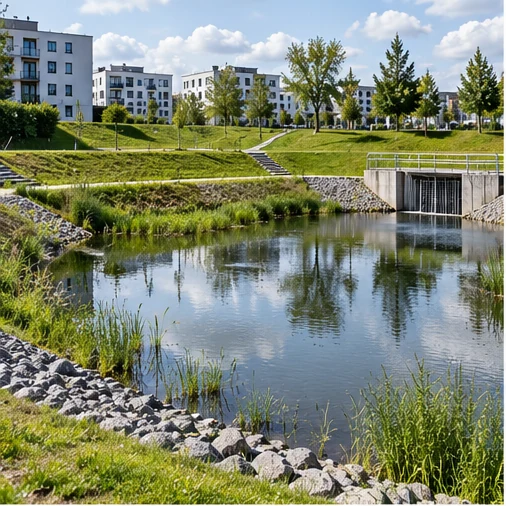
Temporary storage of rainwater in tanks, basins and other facilities. This helps reduce peak runoff and store water.
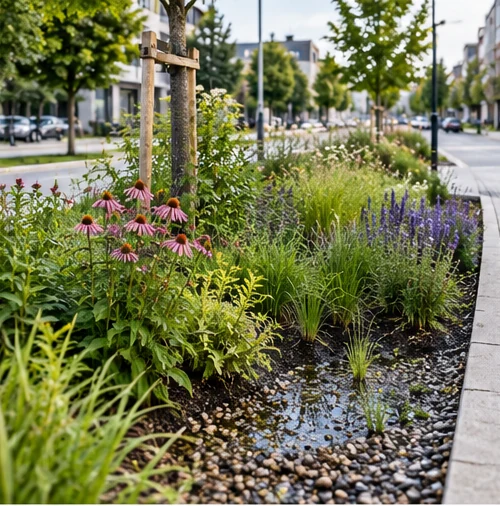
Introducing water into the ground through basins, infiltration swales and soakaway systems, after assessing soil and groundwater conditions and runoff quality.
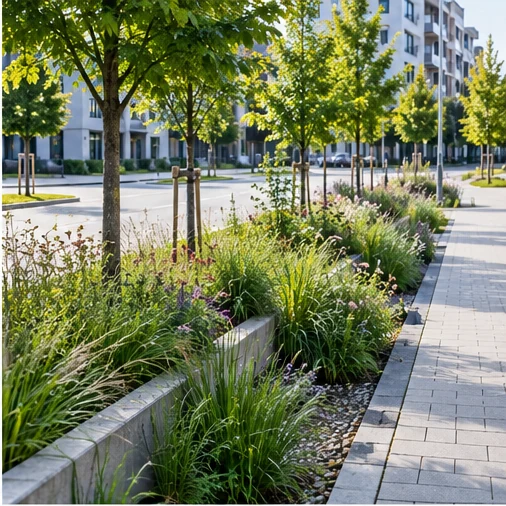
Green roofs, rain gardens, retention parks and bioretention combine hydrological, ecological and social functions.
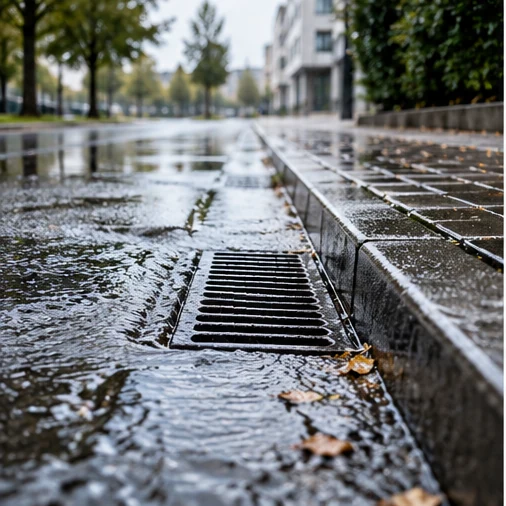
Pipes, inlets, manholes and devices that discharge excess water. The drainage system should work in conjunction with retention solutions.
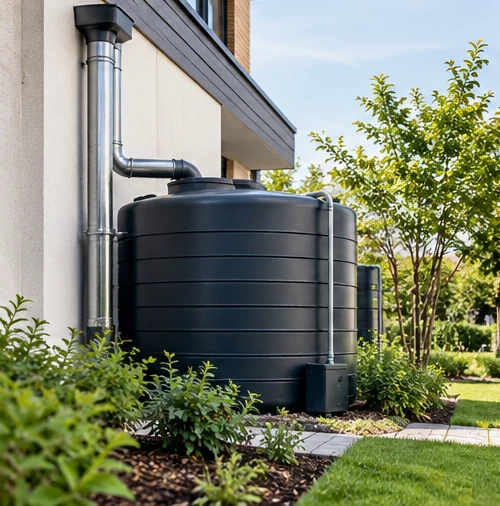
Rainwater can be used for watering green spaces and cleaning, among other purposes, subject to water quality requirements.
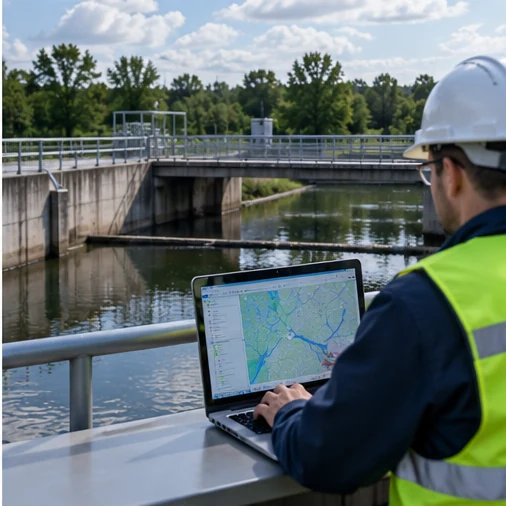
Hydrological and hydraulic models and sensors help predict flows, identify risks and support system operation.
An effective system is developed in several interconnected stages – from assessing local conditions to long-term infrastructure maintenance.
1
Analysis of rainfall, surface runoff, topography, soil conditions and existing infrastructure.
2
Defining priorities: flood mitigation, retention, infiltration and stormwater reuse.
3
Combining green, blue and engineering solutions according to the needs of the area.
4
Testing system performance under different rainfall scenarios and assessing the risk of overloading.
5
Regular inspections, cleaning, monitoring and adjustment of system operation over time.
RESILIENCE • RETENTION • QUALITY OF LIFE
Well-planned solutions support infrastructure, the environment and residents’ everyday lives.
Retention and controlled discharge reduce the load on drainage systems during heavy rainfall.
Retaining and using rainwater helps conserve water and supports the local water cycle.
Greenery and water features improve the microclimate, the appearance of public spaces and conditions for biodiversity.
Combined solutions increase a city’s ability to respond to heavy rainfall and periods of drought.
Water does not respect administrative boundaries. Decisions concerning roads, green spaces, drainage and development should be coordinated at the catchment scale.
Sponge city is an approach that increases the ability of urban spaces to capture, store, infiltrate and use rainwater. It is not a single technology, but a network of interconnected solutions.
Integrated management requires cooperation between local authorities, infrastructure operators, designers, researchers and residents, as well as regular evaluation of implementation outcomes.
It involves planning and implementing measures to capture, retain, treat, use and safely discharge rainwater.
Retention, infiltration, rainwater reuse, blue-green infrastructure and controlled discharge.
Retention means temporarily storing water, while infiltration means allowing it to soak into the ground. Both processes can occur simultaneously.
It has limited capacity. During heavy rainfall, inflow may exceed this capacity; retention solutions help reduce the load.
A network of green spaces and water features that combines water management with ecological and social benefits.
No. This depends on factors including soil permeability, groundwater levels, runoff quality and legal requirements.
Responsibility depends on ownership, the type of infrastructure and applicable regulations; it is often shared among several entities.
Risk assessment, drainage maintenance, retention, infiltration and planning safe flow paths for excess water should be combined.
KNOWLEDGE • EXPERIENCE • PRACTICE
How can retention, drainage, modelling and urban management be combined into a coherent system? Stormwater Poland is a forum for sharing experiences among local authorities, water utilities, designers, researchers and technology providers.
3-4 March 2027 • Poznań, Earth Hall, MTP